
Gulliver's Travels: Before and Beyond
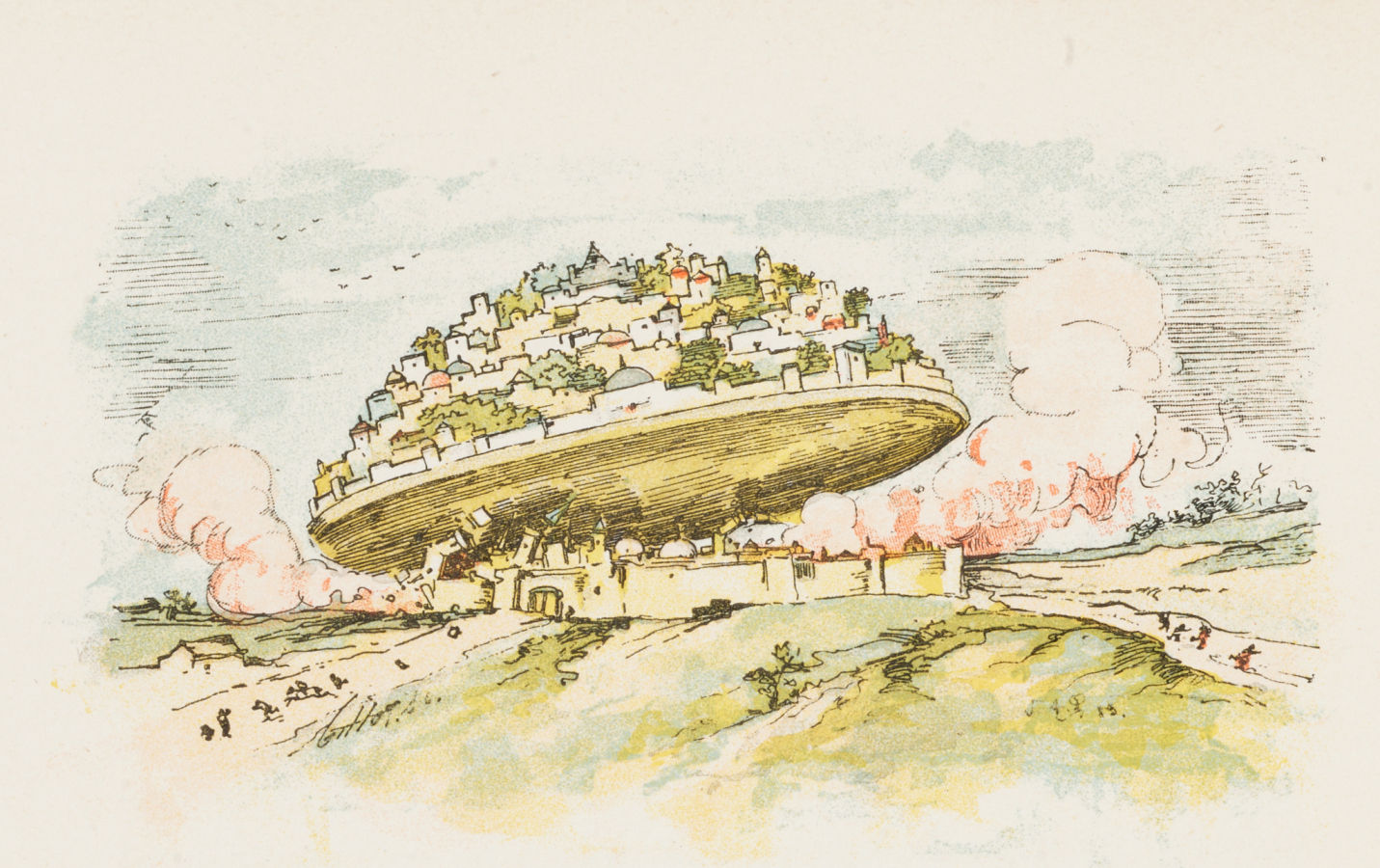
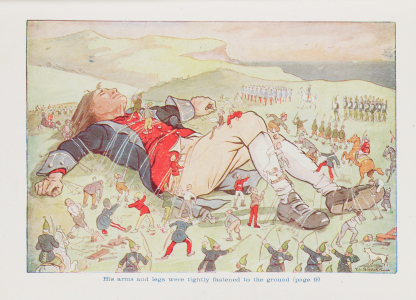
When the first copies of Gulliver’s Travels were sold on 26 October 1726, Jonathan Swift could have had no idea just how enduring the success of his book would be. Reimagined in films and theme parks, and by illustrators and satirists, Gulliver has long been established as a global cultural icon, and even for those who have not read the original novel, scenes from his adventures are some of the most instantly recognisable images from literature in the English language.
At first glance a tale of a hapless adventurer who visits extraordinary lands inhabited by dollhouse-sized people, giants, and talking horses, Gulliver’s Travels is a sophisticated satire by a pamphleteer closely involved in some of the most important political and intellectual circles of his day. Gulliver reflects, in both intentional and unwitting ways, the imperial context that gave rise to the scientific advances parodied in his escapades.
To mark the 300th anniversary of the publication, this exhibition tells the story behind the story of Gulliver. Beginning with influences and antecedents, it goes on to map the landscape of contemporary travel writing and the colonial infrastructure that supported it, and finally explores Gulliver’s continued voyages in time and space through Swift’s enduring influence upon speculative fiction.
Gulliver's Travels: Before and Beyond
When the first copies of Gulliver’s Travels were sold on 26 October 1726, Jonathan Swift could have had no idea just how enduring the success of his book would be. Reimagined in films and theme parks, and by illustrators and satirists, Gulliver has long been established as a global cultural icon, and even for those who have not read the original novel, scenes from his adventures are some of the most instantly recognisable images from literature in the English language.
At first glance a tale of a hapless adventurer who visits extraordinary lands inhabited by dollhouse-sized people, giants, and talking horses, Gulliver’s Travels is a sophisticated satire by a pamphleteer closely involved in some of the most important political and intellectual circles of his day. Gulliver reflects, in both intentional and unwitting ways, the imperial context that gave rise to the scientific advances parodied in his escapades.
To mark the 300th anniversary of the publication, this exhibition tells the story behind the story of Gulliver. Beginning with influences and antecedents, it goes on to map the landscape of contemporary travel writing and the colonial infrastructure that supported it, and finally explores Gulliver’s continued voyages in time and space through Swift’s enduring influence upon speculative fiction.
Exhibition Overview
Gulliver’s Travels parodies many contemporary genres, most notably travel narratives, which are inseparable from imperial expansion. Many advances in science and natural history relied on colonial infrastructure and were made possible at the direct expense of conquered and enslaved peoples.
The first section of the exhibition, Influences, opens with literary contexts and references that inspired memorable moments in the text – from the giants of the Odyssey to the tiny world opened up by the invention of the microscope.
The second section, Contemporaries, draws out the contradictions in Swift’s views on empire. Swift was born in Ireland to English parents and pursued a career in the Church of Ireland, holding prominent positions in Dublin while retaining important correspondents in London. Like many of his friends, he invested in the South Sea Company, which profited from the slave trade. While he sold his shares in 1714, this was due not to any moral qualms but to concerns about the precarity of the investment.
It might seem a surprise, then, that Swift was an ardent critic of British imperialism, especially in Ireland, and used Gulliver’s adventures to critique the methods of colonial exploitation. However, the idea of white sovereignty is a central hypocrisy of the Enlightenment period. Swift – and Gulliver, who was a ship’s surgeon, a role indispensable to slave traders – is just one example.
By exploring the deep engagement of the text of Gulliver’s Travels with contemporary intellectual thought, we can see how deeply rooted the slave economy was in 18th century British society, and how its imagery permeates society today, even when the original context is no longer widely remembered.
The final section of the exhibition, Legacies, draws upon the University of Liverpool’s Science Fiction Collection, offering a snapshot of some of the many retellings and responses to Swift. The genre of science fiction proudly claims Swift as one of its first literary antecedents, and, in turn, has picked up the baton of using fantastical worlds to critique contemporary society.
Readings from Gulliver's Travels
To celebrate Liverpool Literary Festival 2026, hear 10 actors, authors and scholars read aloud passages of Gulliver's Travels discussed in the exhibition. They are placed throughout the sections above, but you can also listen to all 10 in a row here.
Readings from Gulliver's Travels
To celebrate Liverpool Literary Festival 2026, hear 10 actors, authors and scholars read aloud passages of Gulliver's Travels discussed in the exhibition. They are placed throughout the sections above, but you can also listen to all 10 in a row here.
This exhibition was co-curated by Special Collections & Archives and the Department of English.
This exhibition was co-curated by Special Collections & Archives and the Department of English.