
Manuscript Fragments
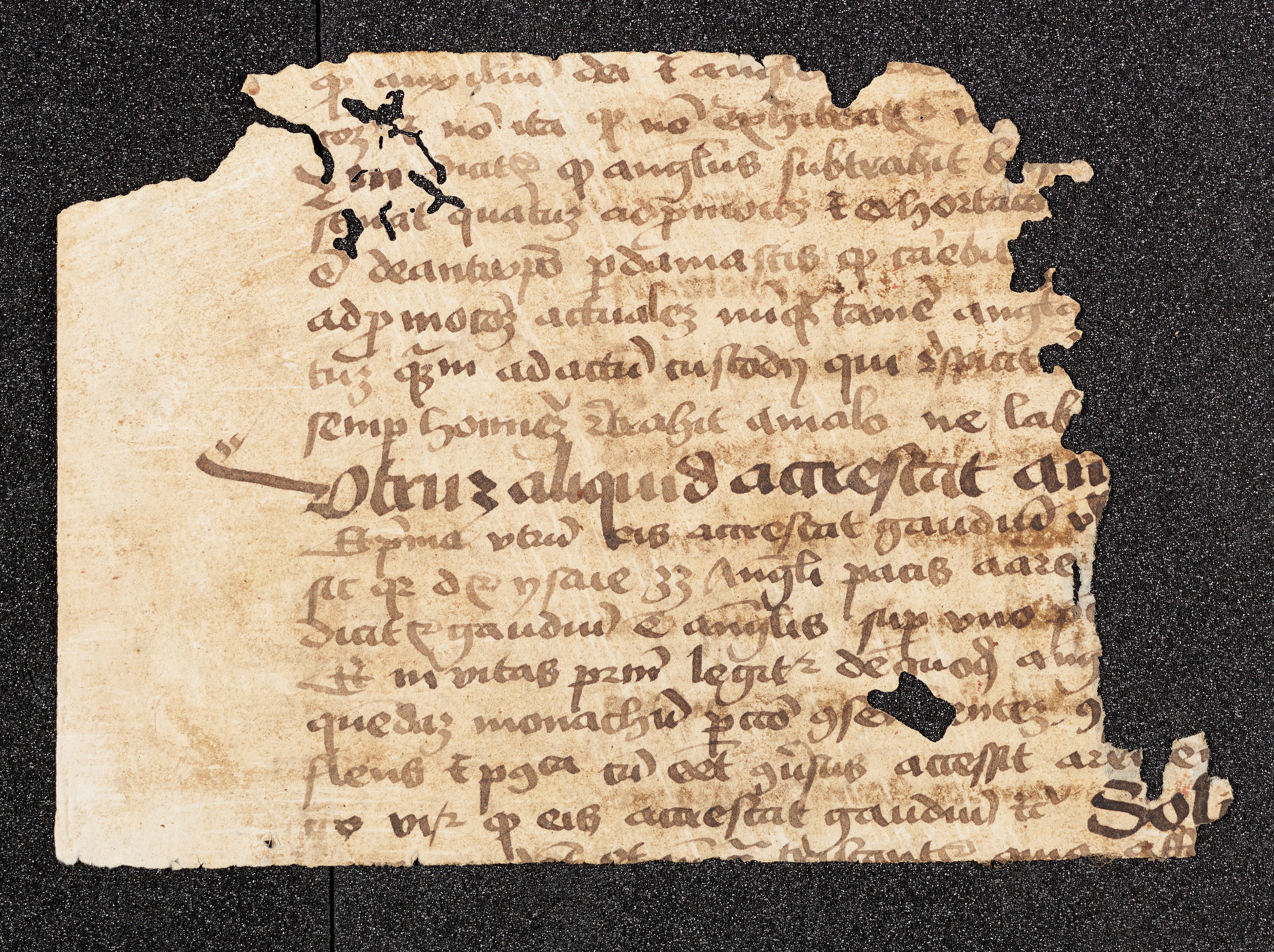
Medieval manuscript fragments are all that remain of once complete handwritten books. They offer a tantalising witness to otherwise lost texts and beautiful handmade objects.
Fragments can consist of a single leaf, part of a leaf, or a small number of leaves. The fragments in the University of Liverpool collections date from the 11th to the late 15th centuries. In most cases, the key to their survival was reuse.
During the 15th to 17th centuries, when a medieval text had come to be considered obsolete or out of date, it was common for the leaves to be given a second life as spine linings, endpapers, or board covering material in the bindings for new manuscripts or printed books. If a fragment was detached again through rebinding, repair or removal, glimpses of the later binding remain in the form of sewing holes, glue stains or even a hole for a chain.
In the 19th and 20th centuries, fragments came about for less utilitarian reasons: book collectors were interested in cutting out and collecting decorative images from complete manuscripts, and booksellers made profits by selling off beautiful books one leaf at a time.
Fragments tell stories about the changing reading habits and interests of medieval, early modern and modern book-buyers. By uncovering and providing access to our fragment collections, this resource makes it easier to study them and make virtual reconstructions.
Your search has also found results in related AM products.
Show me the results